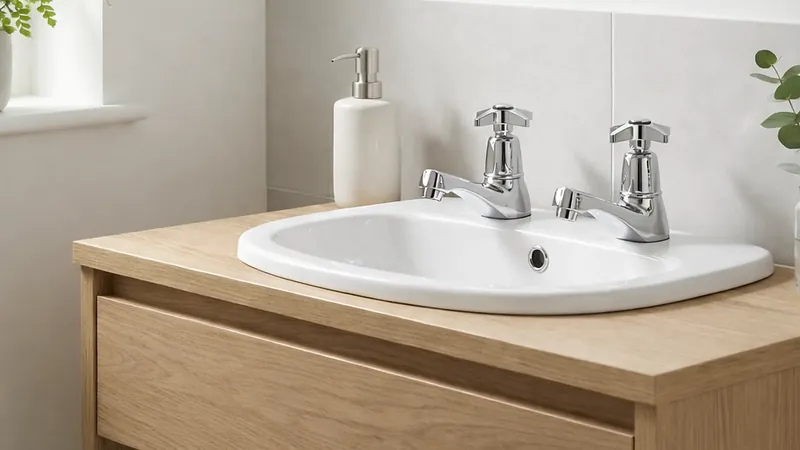

What is DZR brass, and why does it matter for your taps?
DZR brass is brass made to resist dezincification, a slow corrosion that quietly strips the zinc out of ordinary brass. Here is what that means for the taps in your home, and how to tell what yours are made of.
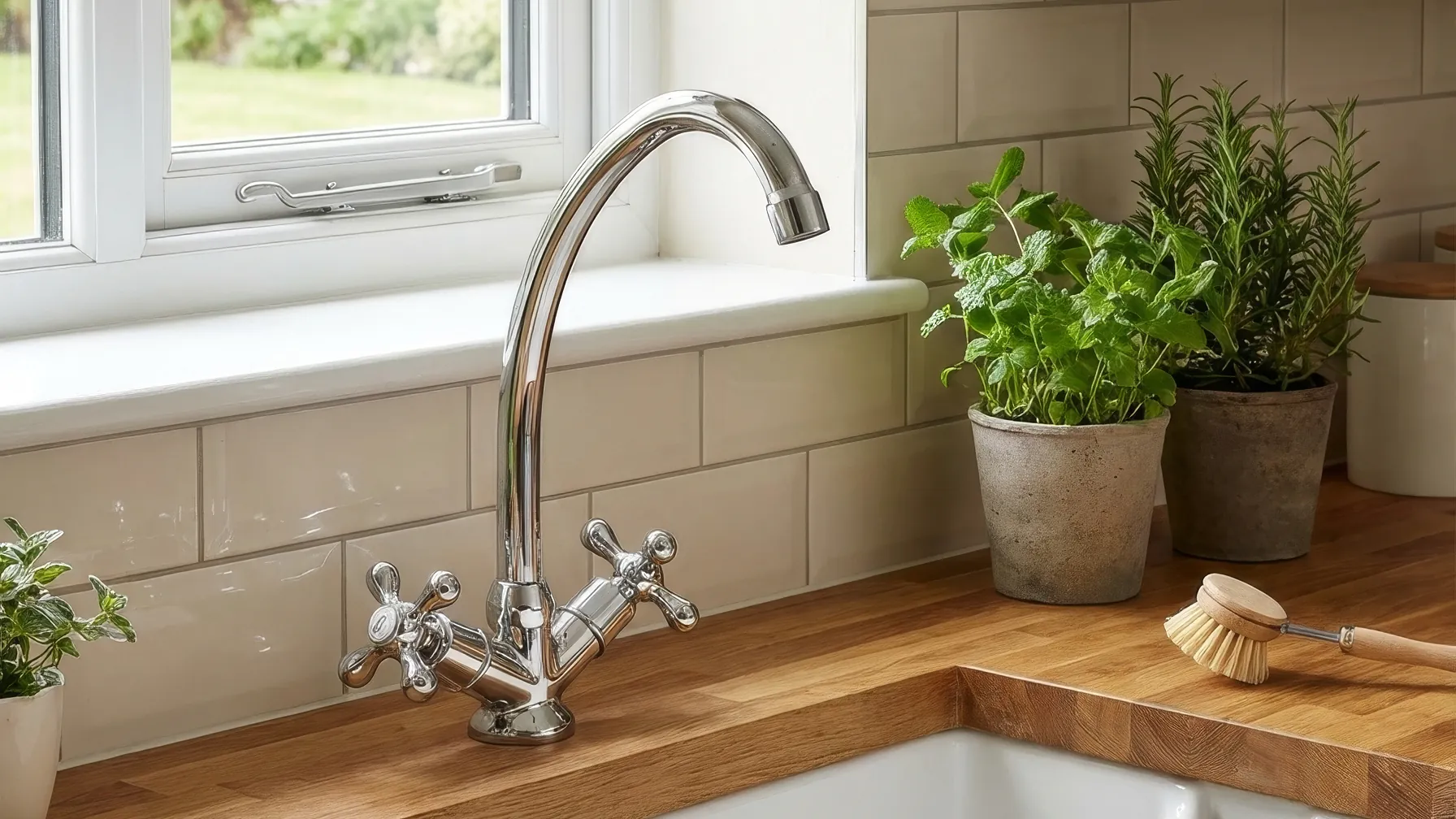
DZR stands for dezincification resistant. It describes a brass made so that the water running through it cannot slowly pull the zinc out of the metal.
Ordinary brass can lose its zinc after years in contact with certain kinds of water, and when it does, it turns weak and porous from the inside while looking perfectly normal from the outside. DZR brass is made to stop that from happening, which is why it is the material of choice for taps and fittings that are expected to last.
DZR brass at a glance
- DZR means dezincification resistant.
- Dezincification is a type of corrosion in which zinc leaches out of brass, leaving the metal weak and spongy.
- It is most likely where water is soft, slightly acidic or high in chlorides, particularly when that water is warm or left standing.
- DZR brass has its resistance proven by a laboratory test, ISO 6509.
- Once a tap is plated you cannot tell DZR brass from ordinary brass by looking at it. The specification is the only reliable guide.
First, what brass actually is
Brass is an alloy of copper and zinc. Shift the balance between the two and you get a different metal. More zinc makes brass cheaper and easier to machine, which is why so much everyday brass contains plenty of it.
Look at a standard brass under a microscope and you will often see two structures sitting side by side. One is rich in copper and very stable. The other holds a higher share of zinc, and that is where the trouble begins.
What is dezincification?
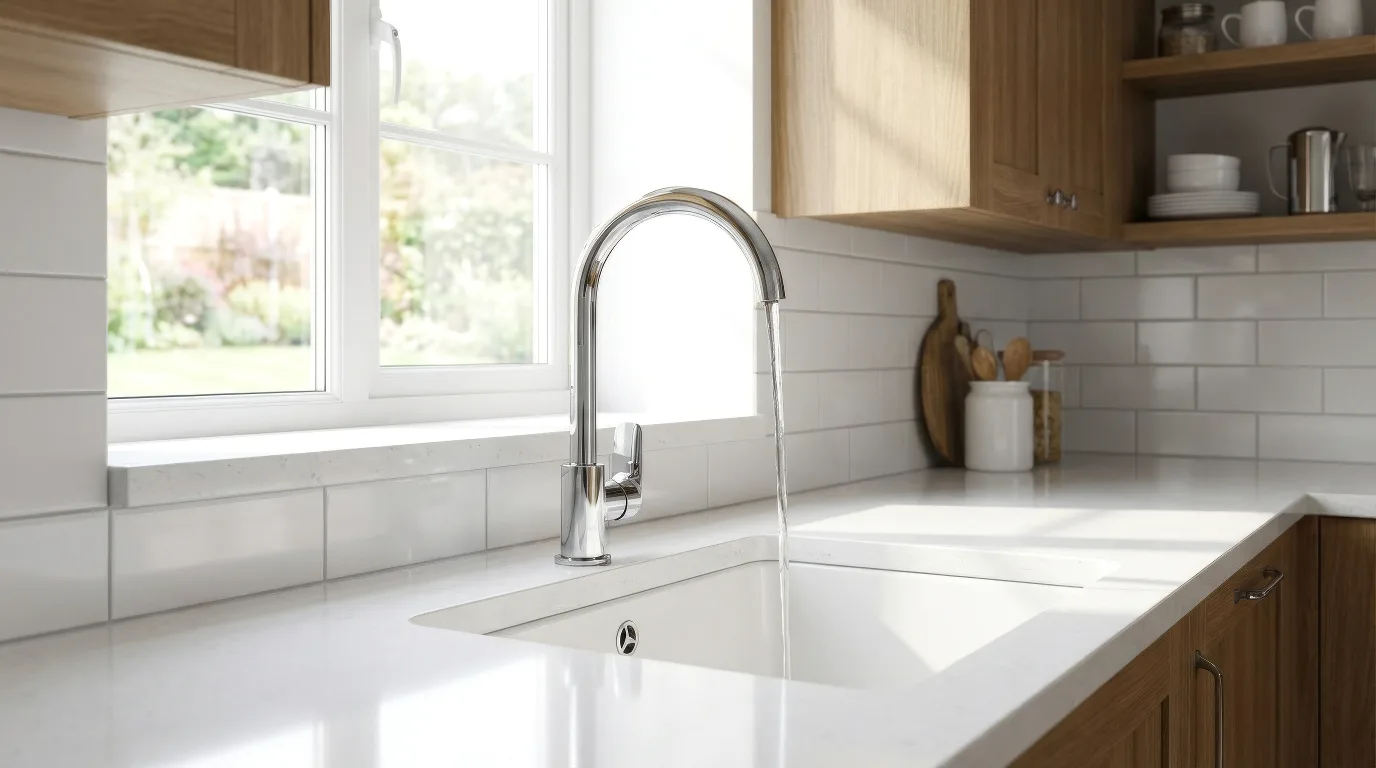
Dezincification is corrosion in which the zinc in brass dissolves into the water and leaves behind a porous, copper coloured skeleton. The part keeps its shape, so from the outside it can look completely sound. Inside, much of its strength has gone.
It does not happen everywhere. The water has to be the kind that encourages it: soft, slightly acidic or high in chlorides, and worse when it is warm or sits still in the pipes for long stretches. Those conditions vary from one supply to the next and can change over the life of a building, so most homeowners have no way of knowing in advance whether their water is the risky kind.
The signs to look for
Dezincification works slowly and quietly. The usual clues are:
- a white, crusty deposit building up on a fitting, often compared to meringue
- pink or coppery patches where the brass surface shows through
- a damp patch or slow weep around a joint that nobody has touched
- a fitting that cracks or snaps the first time someone tries to tighten or remove it
By the time any of these appear, the damage is usually done. The remedy is replacement, and when the fitting sits inside a wall or behind a vanity, that can mean opening up finished work.
How DZR brass is different
DZR brass begins with a tightly controlled recipe. The zinc content is held within careful limits and a trace of arsenic is added to the alloy, which inhibits the loss of zinc. The metal is then heat treated so that its structure settles into the stable, copper rich form rather than the vulnerable zinc rich one. What you are left with is a brass that stays sound in water that would gradually hollow out an ordinary alloy.
The claim is also measurable. DZR brass is tested to an international method, ISO 6509, in which a sample is held in an aggressive solution and then examined to see how far any dezincification has travelled into the metal. A brass that stays within the limit earns the name. One that does not, does not.
Why it matters most in a tap
A tap is the hardest working fitting in a home. It holds mains pressure around the clock, mixes hot and cold water inside its body, and gets opened and closed thousands of times a year. It is also the fitting most people only think about once it lets them down.
That is why the body material matters more than the finish. Chrome plating protects and polishes the outside, but the water travels through the brass underneath. If that brass is vulnerable, a beautiful tap can fail from within while it still looks brand new.
It also explains why the guarantee on a tap says something about what it is made of. No manufacturer will stand behind a tap for a decade unless the metal inside is built to last that long.
How to check whether a tap is made from DZR brass
Plated DZR brass and plated ordinary brass look identical, so the checking happens on paper. A few questions settle it:
- What does the specification say? A reputable manufacturer names the body material. Look for DZR or dezincification resistant brass, rather than simply brass or solid brass.
- Has it been independently approved? In South Africa, taps accepted under JASWIC, the Joint Acceptance Scheme for Water Installation Components, have been assessed against the relevant SANS standard.
- How long is the guarantee on the body? A long guarantee on a tap body usually goes hand in hand with a corrosion resistant alloy.
- What about the parts you cannot see? Valves, connectors and other brass fittings behind the wall carry the same water as the tap, so the same question applies to them.
Where H&C uses DZR brass
H&C builds its core tap ranges on DZR brass bodies. The Bella and Kariba Black single lever mixers use it, as do the Art, Breo and Divo screw down taps and the commercial and medical taps.
The rest of the specification follows the same thinking. Bella and Kariba Black use 35 mm ceramic cartridges and are JASWIC accepted to SANS 1480. Art, Breo and Divo are JASWIC accepted as Class 2 screw down taps to SANS 226. The chrome finishes are salt spray tested for 200 hours, and Bella, Kariba Black, Art, Breo and Divo each carry a ten year guarantee, with a five year guarantee on Kariba Black's powder coated finish.
None of this is visible when you turn the tap on. That is rather the point. The best fittings are the ones you never have to think about again.
Frequently asked questions
Is DZR brass the same as stainless steel?
No. Stainless steel is an alloy based on iron, while DZR brass is a copper and zinc alloy made to resist zinc loss. Brass casts and machines more easily into the detailed shapes a tap body needs, which is why most good taps are brass on the inside, whatever finish they wear on the outside.
Does DZR brass cost more?
A little. The tighter recipe and the extra heat treatment make it slightly more expensive to produce than ordinary brass. Spread across the life of a tap, the difference is small next to the cost of replacing a failed fitting and repairing the damage a leak leaves behind.
Can a plumber tell if old fittings are dezincifying?
Often, yes. The white crust and coppery patches described above are telltale signs, and a badly affected fitting feels weak or crumbles when it is worked on. If you spot them, it is worth having the fittings checked before one of them gives way.
Do all H&C taps use DZR brass?
The core ranges do: Bella, Kariba Black, Art, Breo and Divo, along with the commercial and medical taps. The Houseproud range uses solid brass and carries a five year guarantee.
Choosing taps for a new bathroom or kitchen, or replacing a set that has given up? Browse the H&C tap ranges or find your nearest stockist. The detail that matters most is the one you will never see.
More articles