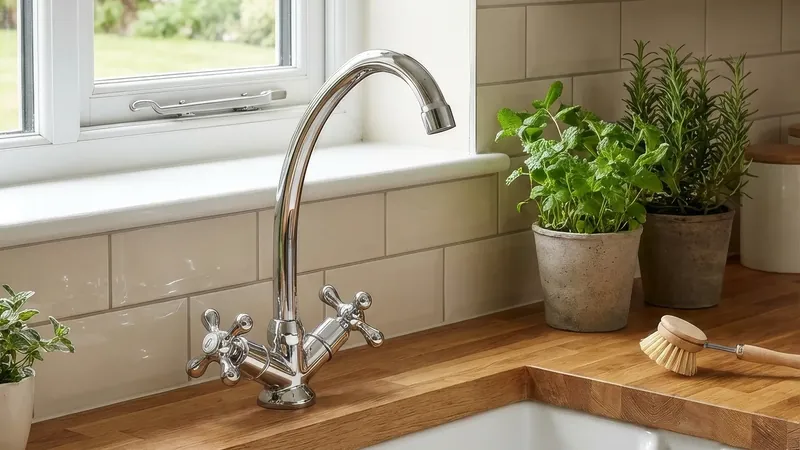

How to choose a basin mixer: a practical buyer's guide
The right basin mixer starts with the basin, not the tap. Here is how to match the two, choose between single lever and two handles, and make sure everything fits on installation day.
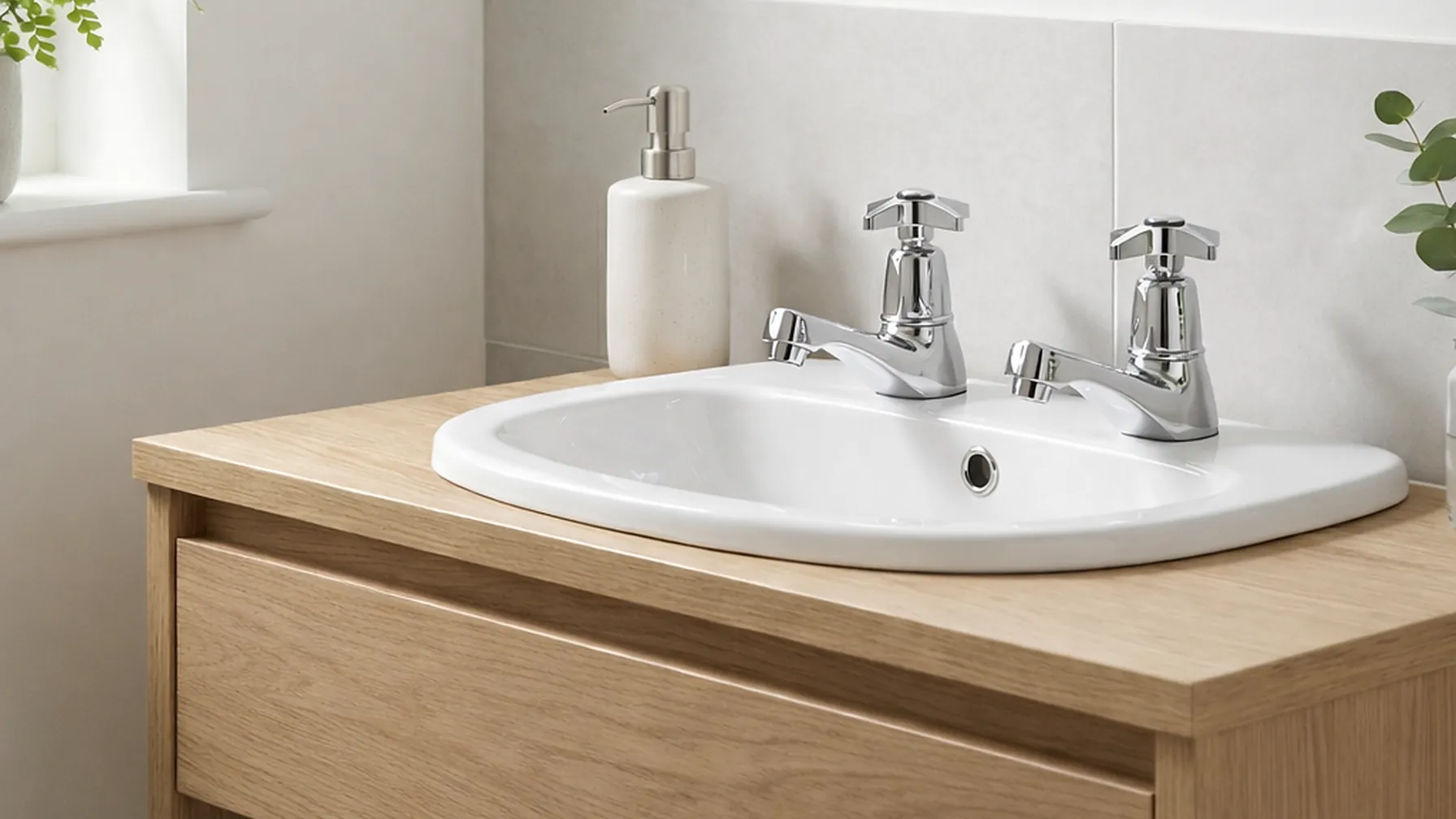
Choosing a basin mixer starts with the basin, not the tap. Count the tap holes, look at how the basin sits, then decide how you want to control the water, which finish suits the room and what the tap is made of.
Get those right and the rest is matching a waste, a trap and two hoses so that everything fits on the day the plumber arrives. This guide walks through each decision in the order that saves the most trouble.
The short version
- One tap hole takes a basin mixer. Two tap holes take a pair of pillar taps.
- Check that the spout reaches far enough over the bowl to put water near its centre.
- Single lever mixers are quick and easy to use. Two handle taps give a classic look and fine control over flow.
- Look for a corrosion resistant body, such as DZR brass, and independent approval, such as JASWIC.
- Match the waste to the basin: slotted if the basin has an overflow hole, unslotted if it does not.
- Budget for the parts under the basin: a waste, a bottle trap, braided hoses and angle valves.
Start with the basin
One tap hole or two?
Look at the back of the basin. A single hole is made for a mixer, which brings hot and cold together in one body and one spout. Two holes are made for a pair of pillar taps, one for hot and one for cold, each with its own spout.
It sounds obvious, but it is the most common mistake people make when they order online. A mixer will not cover a second hole, and a pair of pillar taps cannot share one. If you are replacing taps on an existing basin, the holes decide for you. If you are buying a new basin, choose the tap and the basin together.
Spout height and reach
The water should land roughly in the middle of the bowl. Too short a reach and it splashes against the back wall of the basin. Too long, and it hits the front edge and runs onto the counter.
A standard basin mixer suits most basins set into a vanity, set under a counter or hung on the wall. A bowl that sits on top of the counter is a different matter, because its rim is much higher. It needs a taller mixer or a tap mounted on the wall above it, so check the height before you fall for a particular design.
Single lever or two handles?
This is mostly a question of how you like to use a tap, but there are practical differences too.
A single lever mixer controls flow and temperature with one handle. Lift for more water, turn left for warmer and right for cooler. It works with one hand, which children, older people and anyone with soapy hands will appreciate. Inside, a ceramic cartridge does the mixing, and good ceramic cartridges are smooth, precise and long lasting.
A two handle tap has a separate control for hot and cold. Most use a screw down valve that closes gently against a washer, which gives very fine control over flow and is simple for any plumber to service. It is also the look many people picture when they think of a traditional bathroom.
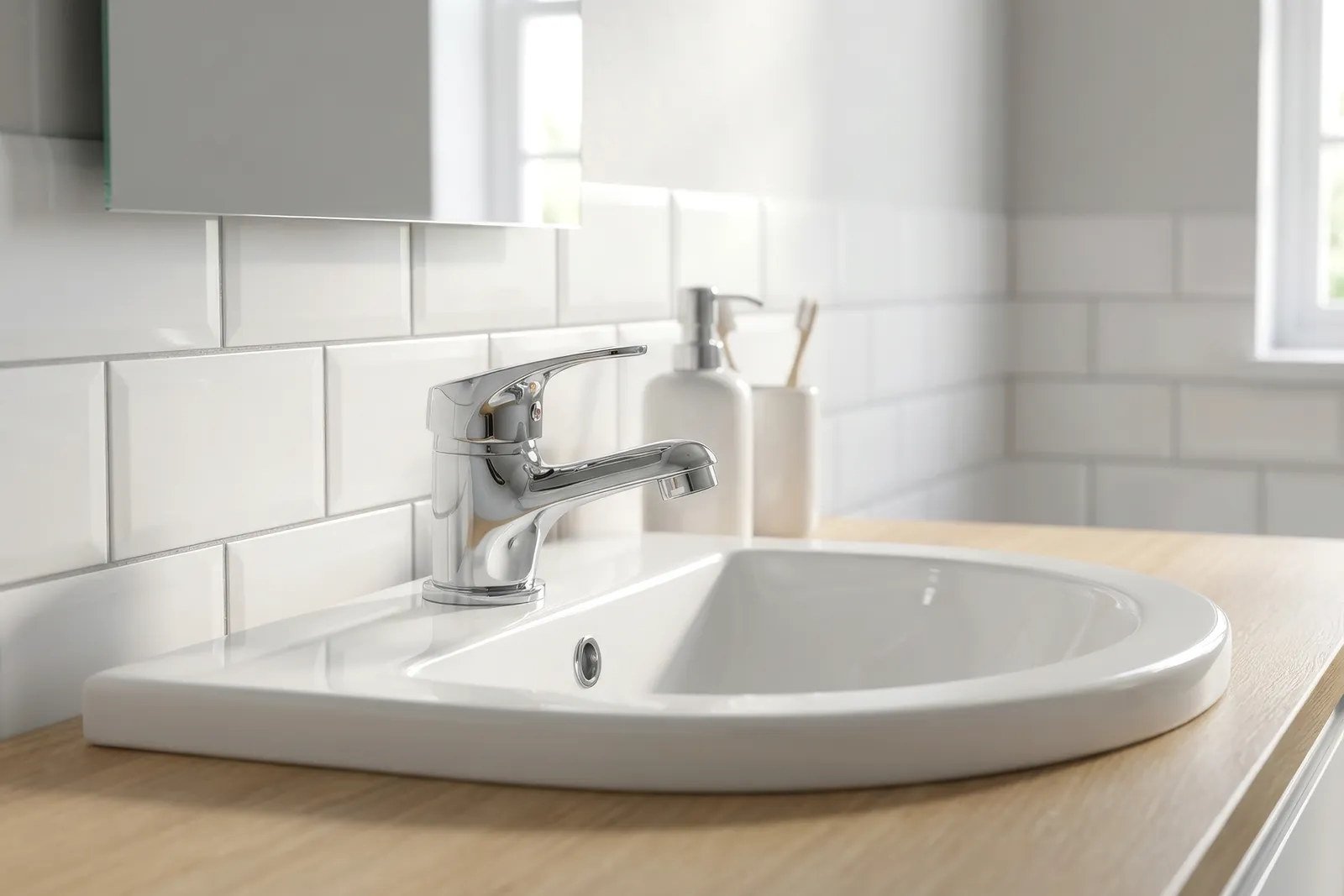
Neither is better in every bathroom. A busy family bathroom often suits a single lever. A guest bathroom or a period renovation can carry two handles beautifully.
What is inside matters more than the outside
Two basin mixers can look identical on a shelf and behave completely differently after five years. Three things decide it.
- The body. Most quality taps are brass inside. In water that is soft, acidic or high in chlorides, ordinary brass can slowly lose its zinc and weaken from within. DZR brass is made to resist that. We explain why in what DZR brass is and why it matters.
- The working part. On a single lever mixer that is the cartridge. A 35 mm ceramic cartridge is a good sign of a mixer built for daily use. On a screw down tap it is the valve and its washer, which should be easy to replace.
- Independent approval. In South Africa, look for acceptance under JASWIC, the Joint Acceptance Scheme for Water Installation Components, which assesses taps against the relevant SANS standard, such as SANS 1480 or SANS 226.
Chrome or matte black?
Chrome is the safe, bright choice. It reflects light, suits almost any bathroom and hides water marks better than you might expect. A quality chrome finish is salt spray tested, which shows how well it resists corrosion and wear.
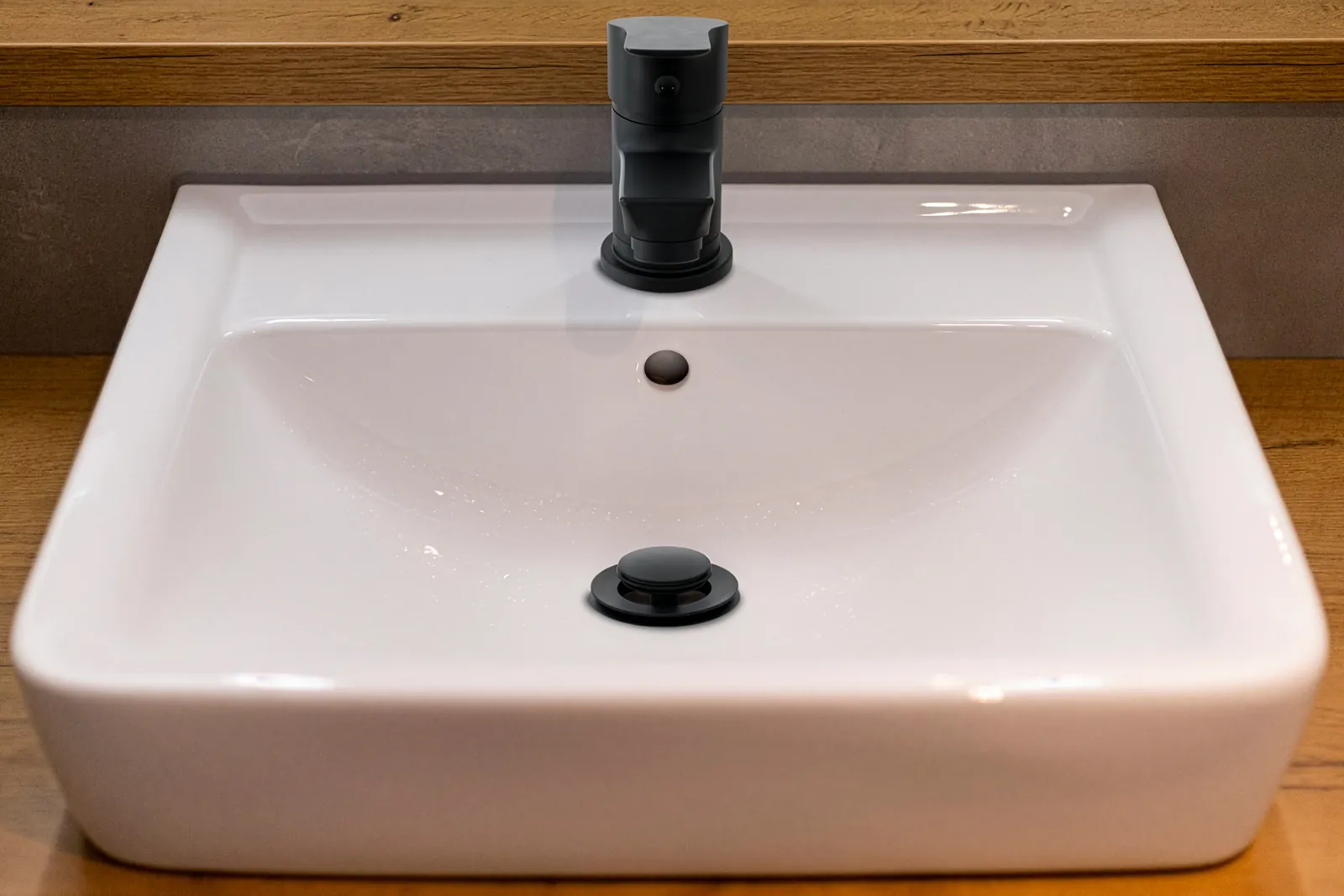
Matte black makes more of a statement and looks particularly good against white basins and pale stone. The best black finishes are powder coated, which resists scratching, chipping and fading.
Whichever you choose, care for it the same way: wipe it with a soft cloth and warm water, and keep abrasive pads and acidic cleaners away from it. They damage chrome and black finishes alike.
Don't forget the parts below the basin
A basin mixer is only half the job. These are the parts that most often cause a second trip to the shop.
- The waste. If the basin has an overflow hole near the rim, you need a slotted waste, which lets overflow water drain away. If it has no overflow, use an unslotted waste. Choose a pop up waste, opened and closed with a press, or a traditional plug. Basin wastes are usually 32 mm.
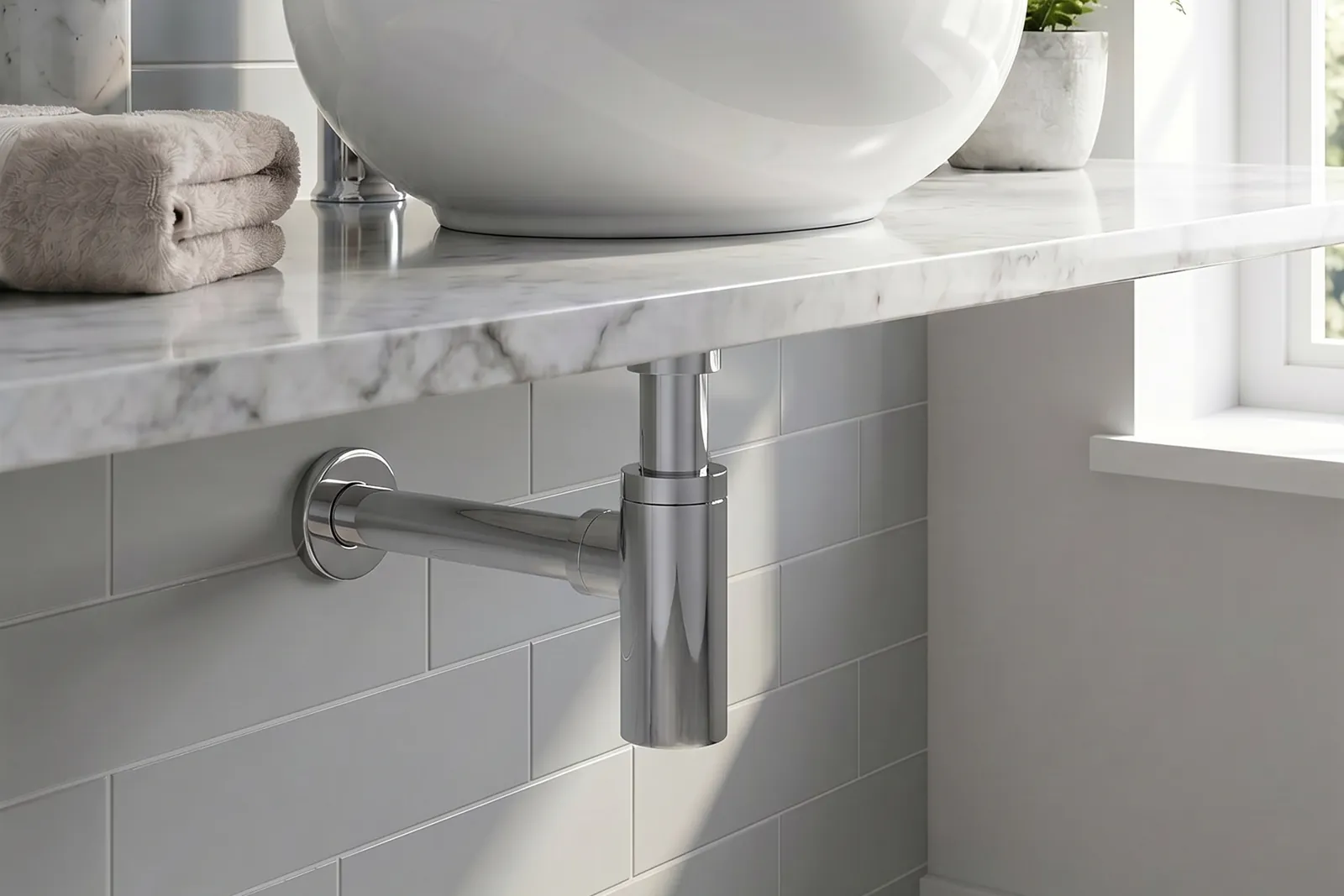
- The trap. A bottle trap sits under the waste and holds a little water to keep drain smells out. A chrome one is worth paying for if the pipework will be on show.
- The hoses. Braided hoses connect the mixer to the water supply. Stainless steel braid with brass inserts is the dependable choice. Many basin mixers come with them, so check before you buy a separate pair.
- The isolating valves. An angle valve on each supply lets you shut off the water to the basin without closing the whole house. Any plumber will thank you for them.
How long should a basin mixer last?
A well made basin mixer should give many years of service, but the best indicator before you buy is the guarantee. A manufacturer only promises a decade when the body, the cartridge and the finish are made to last that long. Short guarantees usually tell you something too.
Comparing the H&C basin mixers
H&C makes basin mixers in each of its tap ranges, so there is a single lever or two handle option for most bathrooms. Every model below is supplied in chrome except Kariba Black, which is powder coated matte black.
| Basin mixer | Control | Body | Approval | Guarantee |
|---|---|---|---|---|
| Bella Basin Mixer | Single lever | DZR brass | JASWIC, SANS 1480 | 10 years |
| Kariba Black Basin Mixer | Single lever, matte black | DZR brass | JASWIC, SANS 1480 | 10 years on the body, 5 on the finish |
| Art Basin Mixer | Two handle, screw down | DZR brass | JASWIC, SANS 226 Class 2 | 10 years |
| Breo Basin Mixer | Two handle, screw down | DZR brass | JASWIC, SANS 226 Class 2 | 10 years |
| Divo Basin Mixer | Two handle, screw down | DZR brass | JASWIC, SANS 226 Class 2 | 10 years |
| Houseproud Basin Mixer | Single lever | Solid brass | Not listed | 5 years |
| Houseproud Swivel Spout | Two handle, screw down | Solid brass | Not listed | 5 years |
The single lever Bella and Kariba Black mixers use 35 mm ceramic cartridges, and the Art, Breo and Divo two handle mixers use screw down valves. Their chrome finishes are salt spray tested for 200 hours, and each comes with 350 mm stainless steel braided hoses with DZR brass inserts. For a two hole basin, the Divo, Breo and Art ranges also make matching basin pillar taps. You can see every model side by side on the basin mixers page.
Frequently asked questions
What is the difference between a basin mixer and a basin tap?
A basin mixer blends hot and cold water in one body and delivers it through a single spout, so it fits a basin with one tap hole. Basin taps, usually called pillar taps, come in pairs, one for hot and one for cold, and fit a basin with two tap holes.
Can I fit a basin mixer to a basin with two tap holes?
Not neatly. A mixer made for one hole leaves the second hole open. For a two hole basin, choose a pair of pillar taps, or replace the basin if you have your heart set on a mixer.
Do basin mixers come with hoses?
Many do, but not all, so check the specification. The H&C Bella, Kariba Black, Art, Breo and Divo basin mixers and the Houseproud single lever basin mixer all come with 350 mm stainless steel braided hoses.
Should I choose a slotted or unslotted waste?
Look for an overflow hole near the top of the basin. If there is one, choose a slotted waste so the overflow can drain. If there is not, choose an unslotted waste.
Why is my basin mixer dripping?
On a single lever mixer, a drip usually points to a worn cartridge. On a screw down tap it is usually the washer. Both can normally be replaced without changing the whole tap. H&C lists spare parts by product code, so you can find the exact part your tap needs.
Ready to choose? Compare every H&C basin mixer, or find your nearest stockist and see them in person. A good basin mixer is one you will use several times a day for years, so it is worth five minutes of checking now.
More articles