
Dripping tap? How to tell if it needs a cartridge, a washer or a new tap
Most dripping taps need one small part, not a whole new tap. Here is how to work out which part has worn, what else commonly goes wrong, and how to keep a tap looking and working like new.

A dripping tap almost always means one small part has worn out, not the whole tap. On a single lever mixer that part is usually the ceramic cartridge. On a tap with separate hot and cold handles it is usually the washer.
Replace the right part and the tap will normally go back to working as it did on day one. The trick is knowing which part to blame, and that comes down to how your tap is built.
Before you start
- Turn off the water to the tap. Look for an isolating valve on each pipe under the basin and give it a quarter turn. If there are none, close the main supply to the house.
- Open the tap to let out the water still in the pipe and release the pressure.
- Put the plug in. Small screws and caps have a way of disappearing down the drain.
- Lay a towel in the basin to catch dropped tools and protect the surface.
- Check the guarantee. If the tap is still covered, speak to your stockist before you take it apart.
Single lever mixer dripping? Look at the cartridge
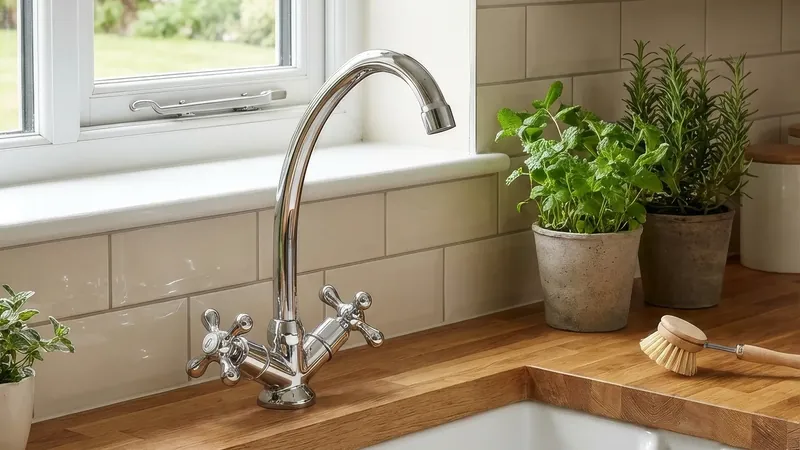
A single lever mixer has no washer. Instead, it controls the water with a cartridge holding two ceramic discs. When you move the lever, the discs slide over each other to open, close and mix hot and cold. They are polished so smooth that they seal against each other without any rubber at all.
Over years of use, or sooner if grit comes down the pipes, a disc can be scratched or chipped. Even a fine scratch is enough to let water creep through, and that shows up as a drip from the spout, a lever that feels stiff or gritty, or a temperature that no longer behaves.
The fix is to replace the cartridge. Cartridges are made in set sizes, measured across the body in millimetres, and with different shapes at the base, so the safest way to get the right one is by your tap's product code. If you can, take the old cartridge with you when you buy the new one.
Two handle tap dripping? It is probably the washer
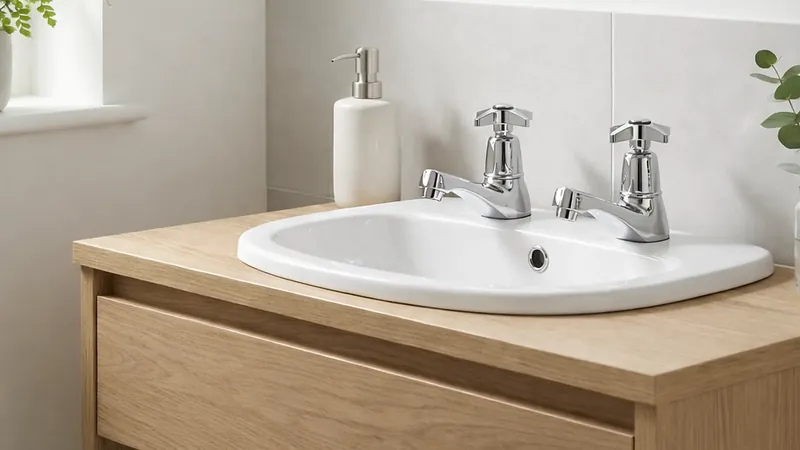
Taps with separate hot and cold handles usually use a screw down valve. Turning the handle drives a small rubber washer down onto a seat inside the tap body to stop the flow. Every time you close the tap firmly, that washer is squeezed a little, and eventually it hardens, cracks or flattens and stops sealing.
A new washer costs very little and is one of the simplest repairs in a home. If a new washer does not stop the drip, the seat it presses on may be worn or pitted. A plumber can reface the seat or replace the valve, which is still far cheaper than a new tap.
One habit makes washers last much longer: close a screw down tap only until the water stops. Forcing it tighter does not make it seal better. It just wears the washer faster.
Other common tap problems, and what they mean
Not every fault is a drip from the spout. This table covers the faults people most often notice and where each one usually comes from.
| What you notice | Most likely cause | Usual fix |
|---|---|---|
| A single lever mixer drips from the spout | Worn or damaged ceramic cartridge | Replace the cartridge |
| A screw down tap drips from the spout | Worn washer, or a worn valve seat | Replace the washer; reface or replace the seat if needed |
| Water seeps from under the handle | Worn seals or O rings | Replace the seals, or the cartridge on a mixer |
| The lever feels stiff or gritty | Scale or grit in the cartridge | Clean or replace the cartridge |
| Weak, spitting or sideways flow | Blocked aerator | Clean or replace the aerator |
| A pop up waste will not stay open or shut | Worn clicker mechanism | Replace the clicker |
| A leak under the basin | Loose connection or tired washer | Tighten, or replace the washer or hose |
Weak or spitting flow
If the water comes out in a weak, uneven or sideways stream, the aerator is the first thing to check. It is the small mesh insert in the tip of the spout that mixes air into the water so it runs soft and even. Over time it collects grit and scale.
Unscrew it, by hand or with a cloth wrapped around a pair of pliers, and rinse it under warm water while you brush it gently with an old toothbrush. In areas with hard water, soaking the removed insert in a mild solution of vinegar and water loosens stubborn scale. Rinse it well afterwards, and keep acidic cleaners well away from the tap's finish. If the mesh is damaged, a replacement aerator is an inexpensive fix.
A pop up waste that will not stay open
A pop up waste opens and closes with a press thanks to a small spring loaded clicker underneath the cap. When the waste will not stay up or down, it is almost always the clicker that has worn, not the whole waste. If water leaks around the waste instead, the silicone washer that seals it to the basin is usually to blame.
When it is time for a new tap
Replacement parts fix most problems, but a new tap makes more sense when:
- the body itself is cracked or corroded, or water seeps from the body rather than from the moving parts
- parts for the tap are no longer made, so a repair is not possible
- the tap has started showing signs of dezincification, such as a white crust or coppery patches on the brass
- you are renovating anyway and want a different style or finish
If you do replace it, a tap with a corrosion resistant body and readily available spares will save you this trouble for a long time. Our guide to choosing a basin mixer explains what to look for, and our explainer on DZR brass covers why the body material matters.
Caring for your taps so they last
A few minutes of care keeps a tap working smoothly and looking new.
- Clean with a soft cloth and warm water. For most marks, that is all a tap needs.
- Avoid abrasive pads, scouring powders and acidic or bleach based cleaners. They scratch and dull chrome and can damage matte black finishes.
- Dry the tap after cleaning. In hard water areas this stops spots of scale forming on the surface.
- Clean the aerator every few months, or whenever the flow starts to weaken.
- Do not overtighten screw down taps. Stop as soon as the water does.
- Run taps you rarely use now and then, so washers and cartridges do not stick.
Finding the right spare part for an H&C tap
A good tap should be worth repairing, so H&C lists the parts that wear by the product code of the tap they fit. On the H&C spares page you can search by your product code and see exactly which parts belong to it, and every product page has a "Spares for this product" section that does the same.
The range covers the parts most likely to need replacing: aerators for basin, sink and bath mixers, handles for the Bella, Houseproud, Art, Breo and Divo ranges, the hot and cold indicators for Art, Breo and Divo, silicone washers and clickers for pop up wastes, and washers for H&C garden and stop taps. A 35 mm short foot ceramic cartridge is listed too.
Your product code is usually on the box and on your invoice, and every code appears in the H&C catalogue. If you cannot find it, send us a message with a photo of the tap and we will help you identify it.
Frequently asked questions
Why does my mixer tap drip after I turn it off?
Usually because the ceramic discs inside the cartridge are scratched or chipped, often by grit from the water supply, so they no longer seal completely. A new cartridge normally cures it.
Can I replace a tap cartridge myself?
Often, yes, if you are comfortable with basic tools. Turn off the water, remove the handle and cover, unscrew the cartridge and fit the new one the same way round. If anything is stiff or corroded, call a plumber rather than forcing it.
How do I know which cartridge my tap needs?
Cartridges vary in diameter and in the shape of their base, so match them by your tap's product code, or take the old cartridge with you when you buy a replacement.
How often should I clean a tap aerator?
Every few months is a good habit, and more often in hard water areas. Clean it sooner if the flow becomes weak, uneven or starts to spray.
Is a dripping tap worth fixing?
Yes. A steady drip wastes a surprising amount of water over a year, and the fix is usually a small, inexpensive part. Leaving it tends to make the wear worse.
A good tap should last for many years, and the right spare part is usually all it takes to keep it that way. Look up your tap on the spares page, or find your nearest stockist for parts and advice.
More articles